GoBlu3 Regional Operation
Field experience, restoration lessons, and a strategic Red Sea frontline.
Operation Red Sea became one of the foundational field experiences behind GoBlu3. It was shaped by direct work across two very different but connected Red Sea realities: Sudan and Port Sudan as a frontline of global ocean warming and coral resilience, and the Suez / Ain Sokhna corridor as a heavily pressured zone of pollution, shipping, industrial activity, coastal development, and marine degradation.
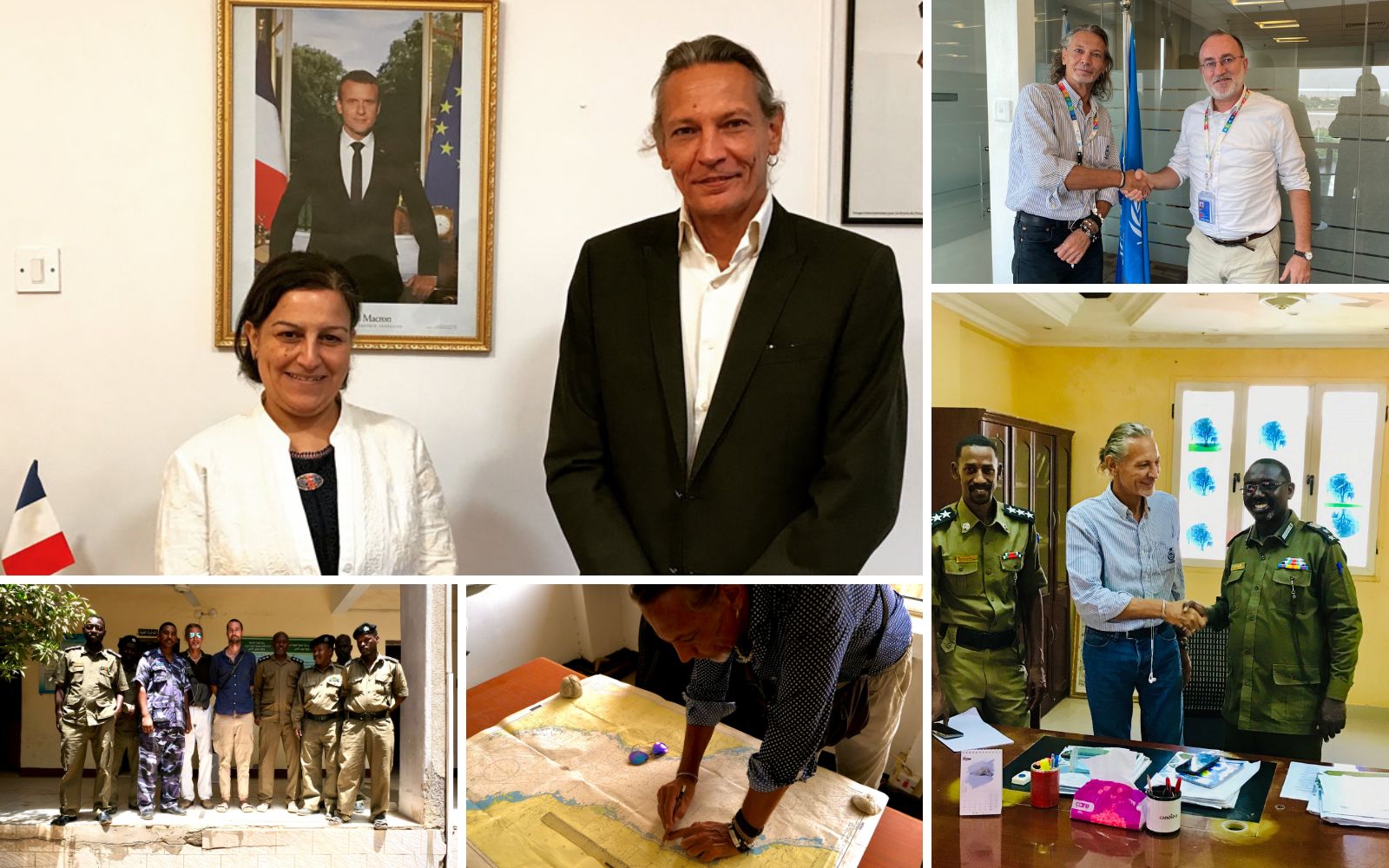
The operation was developed through official cooperation with Sudanese marine institutions and supported by international and diplomatic actors, including the Sudan Marine Parks Authority, Sudan Marine Parks rangers, Red Sea University, the Embassy of the Netherlands, the French Embassy in Sudan, USAID, and UNEP.
This cooperation gave Operation Red Sea its practical foundation: field work, institutional support, ranger training, scientific research, coral nursery planting, contaminant removal, shoreline surveys, hotel staff training, and the hard lessons learned from working in complex coastal and marine environments.
Operation Timeline
Operation Red Sea unfolded through overlapping field phases. Sudan and Port Sudan provided the protected-area, warming-frontline, and institutional cooperation foundation. Suez and Ain Sokhna provided the pollution, restoration, coral nursery, contaminant-removal, and coastal workforce training phase.
Operation Red Sea
Umbrella operation linking Red Sea field research, institutional cooperation, restoration trials, professional diving, and GoBlu3’s practical development model.
Sudan / Port Sudan
Marine parks cooperation, ranger training, Red Sea University engagement, MAERC development concepts, shoreline research, and ocean-warming realities.
Suez / Ain Sokhna
Scientific research, coral nursery planting, 32 tons of contaminants removed, polluted shoreline work, and hotel staff beach-maintenance training.
Two frontlines, one operation
Sudan / Port Sudan — Forefront of Global Ocean Warming
Sudan’s Red Sea coast represents one of the most important and vulnerable marine frontlines in the world. Its reefs, islands, marine parks, and remote coastal systems are part of a region where coral resilience, rising sea temperatures, ecosystem stress, and long-term climate adaptation are no longer abstract scientific themes.
They are visible field realities.
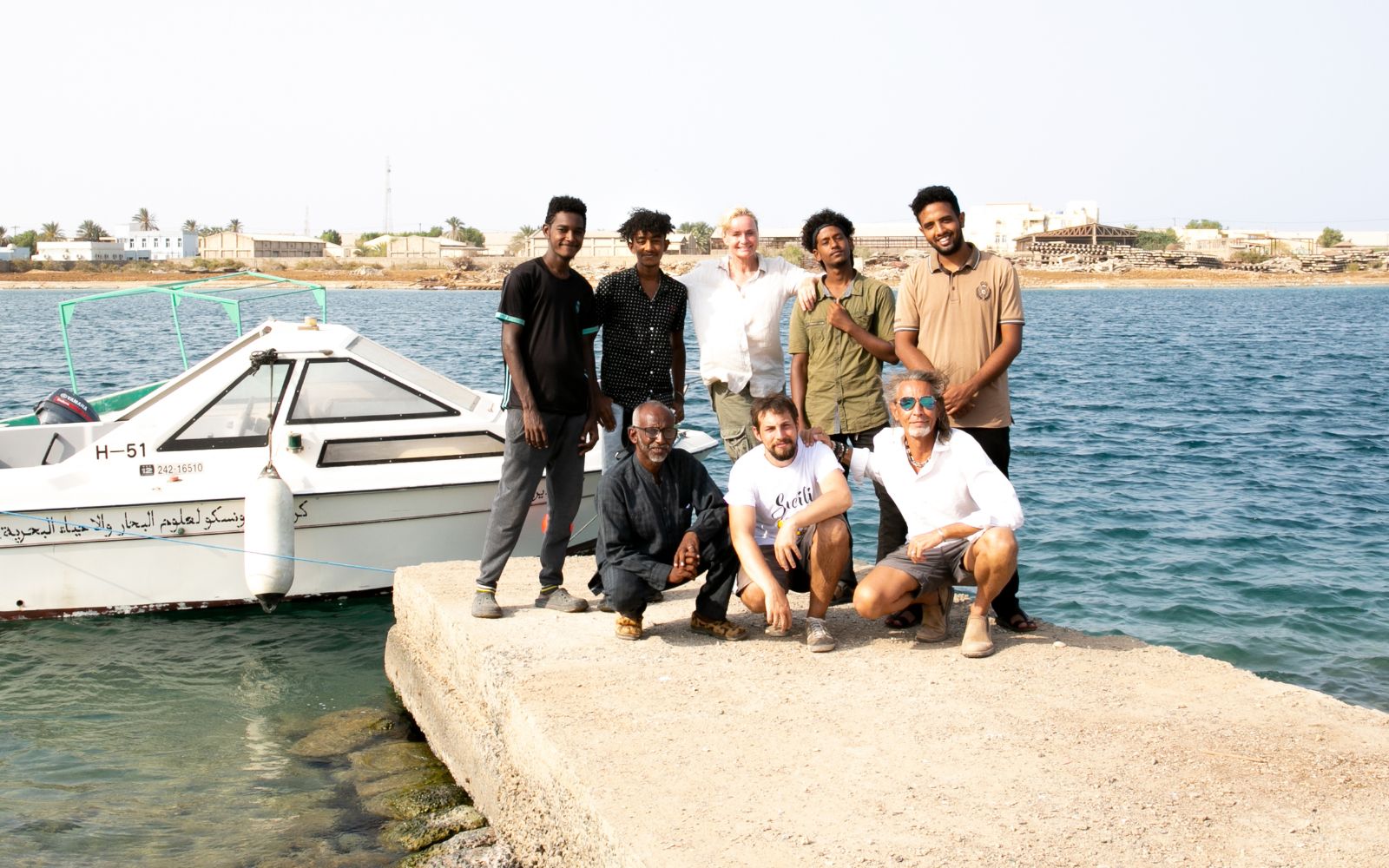
Through cooperation with the Sudan Marine Parks Authority and its rangers, Operation Red Sea supported consulting, field assistance, and training linked to marine protection capacity. This experience showed both the strength and the vulnerability of local conservation structures. Marine protected areas need more than boundaries on a map. They need trained people, field logistics, monitoring capacity, operational support, and long-term institutional continuity.
Marine parks and ranger capacity
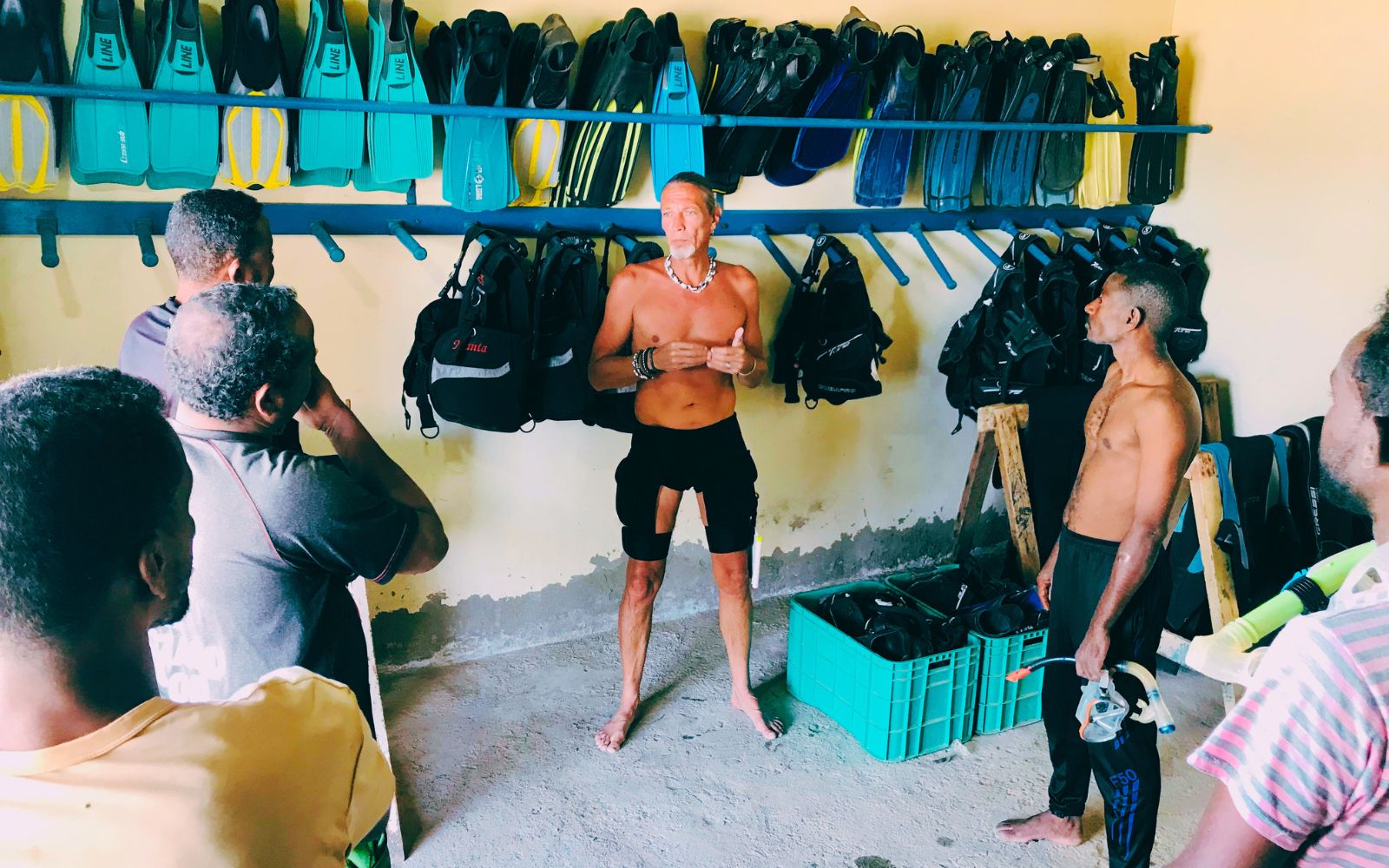
Marine Parks, Rangers, and Local Protection
Operation Red Sea included cooperation with the Sudan Marine Parks Authority and its rangers, supporting marine protection through consulting, training, and field-based capacity development.
This work reinforced one of the central lessons behind GoBlu3: conservation succeeds or fails through people on the ground. Rangers, local field teams, coastal operators, divers, boat crews, hotel staff, and community stakeholders are the people who see the marine environment every day.
If they are unsupported, undertrained, or disconnected from the wider restoration strategy, even the best conservation plans remain fragile. The Red Sea experience showed that professional support must reach the people responsible for daily field realities.
Research and education capacity
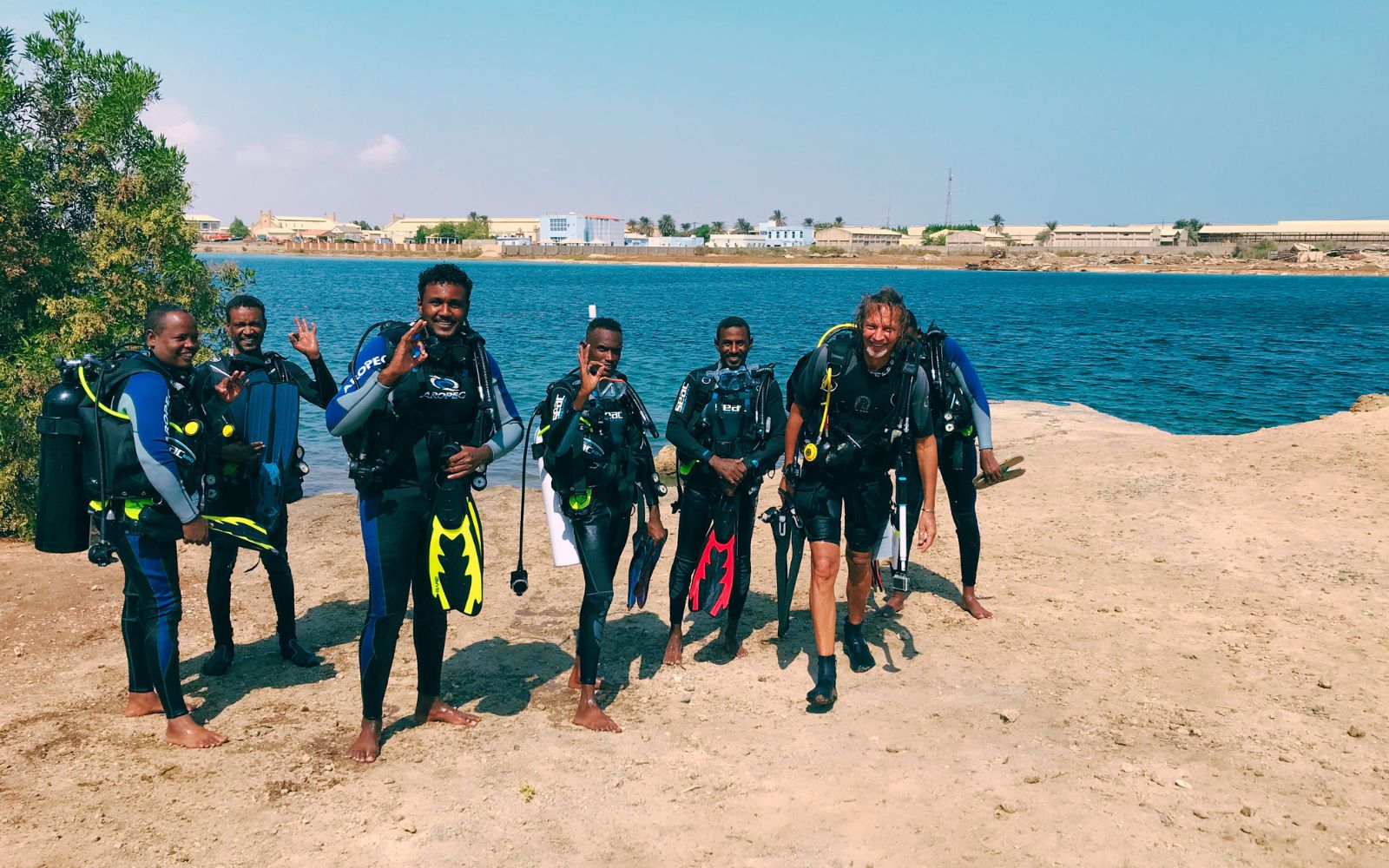
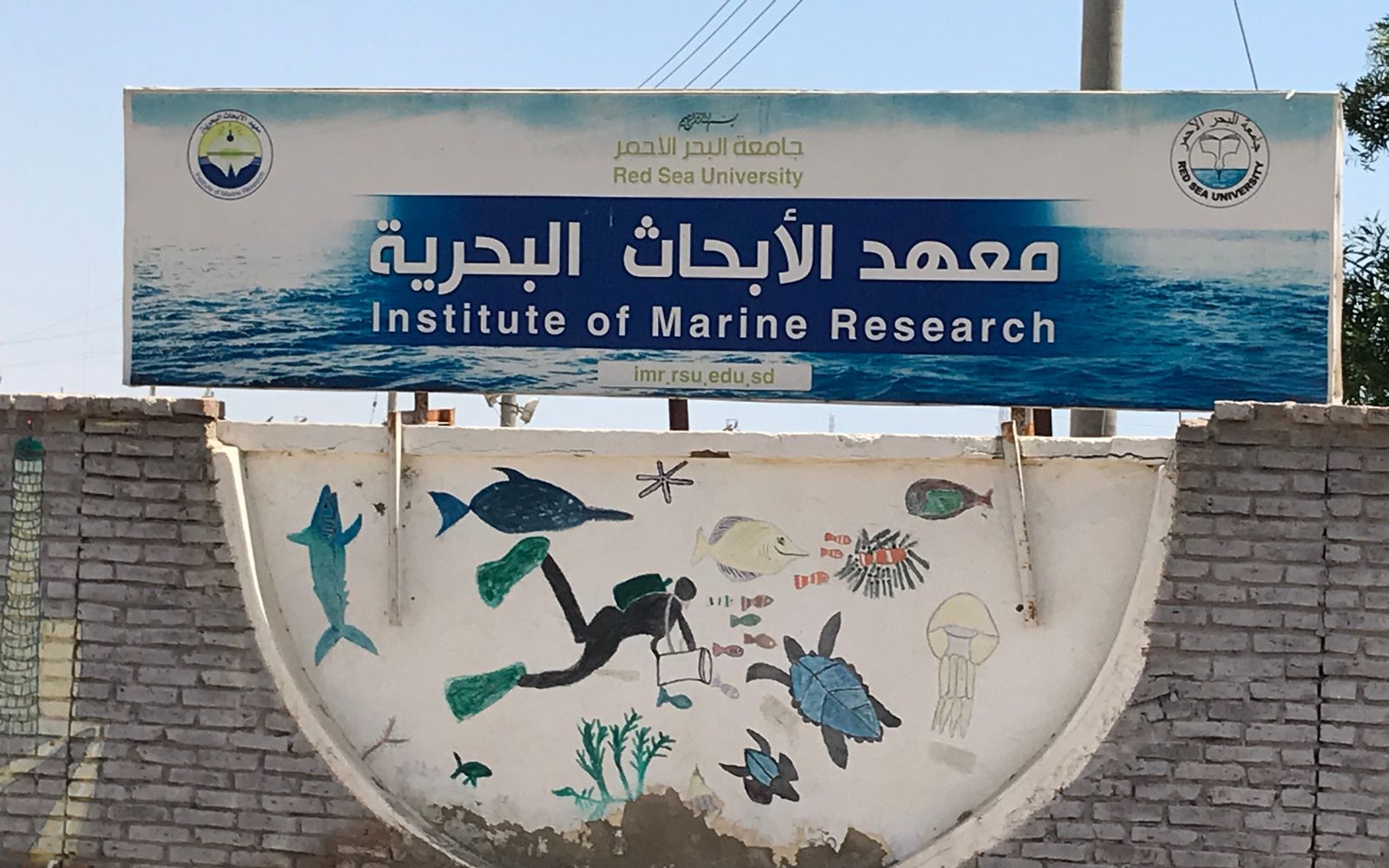
Red Sea University and MAERC
Operation Red Sea was connected to Red Sea University through work on the Marine Academy and Experimental Research Center concept.
The purpose was to help bridge professional diving, marine research, field education, and applied restoration. This approach remains central to GoBlu3. Restoration cannot rely only on visiting experts or short-term campaigns. It needs local knowledge structures, practical training, scientific continuity, and field professionals who can collect data, monitor change, support restoration work, and translate research into action.
The MAERC concept helped shape the idea that restoration must be linked to education, research, and local professional development.
Pollution and coastal pressure
Suez / Ain Sokhna — Pollution and Coastal Pressure
The Ain Sokhna and Suez Canal corridor represents a different Red Sea reality. Here, the pressure is not only climate stress, but also pollution, shipping, industrial activity, tourism development, shoreline degradation, and recurring coastal contamination.
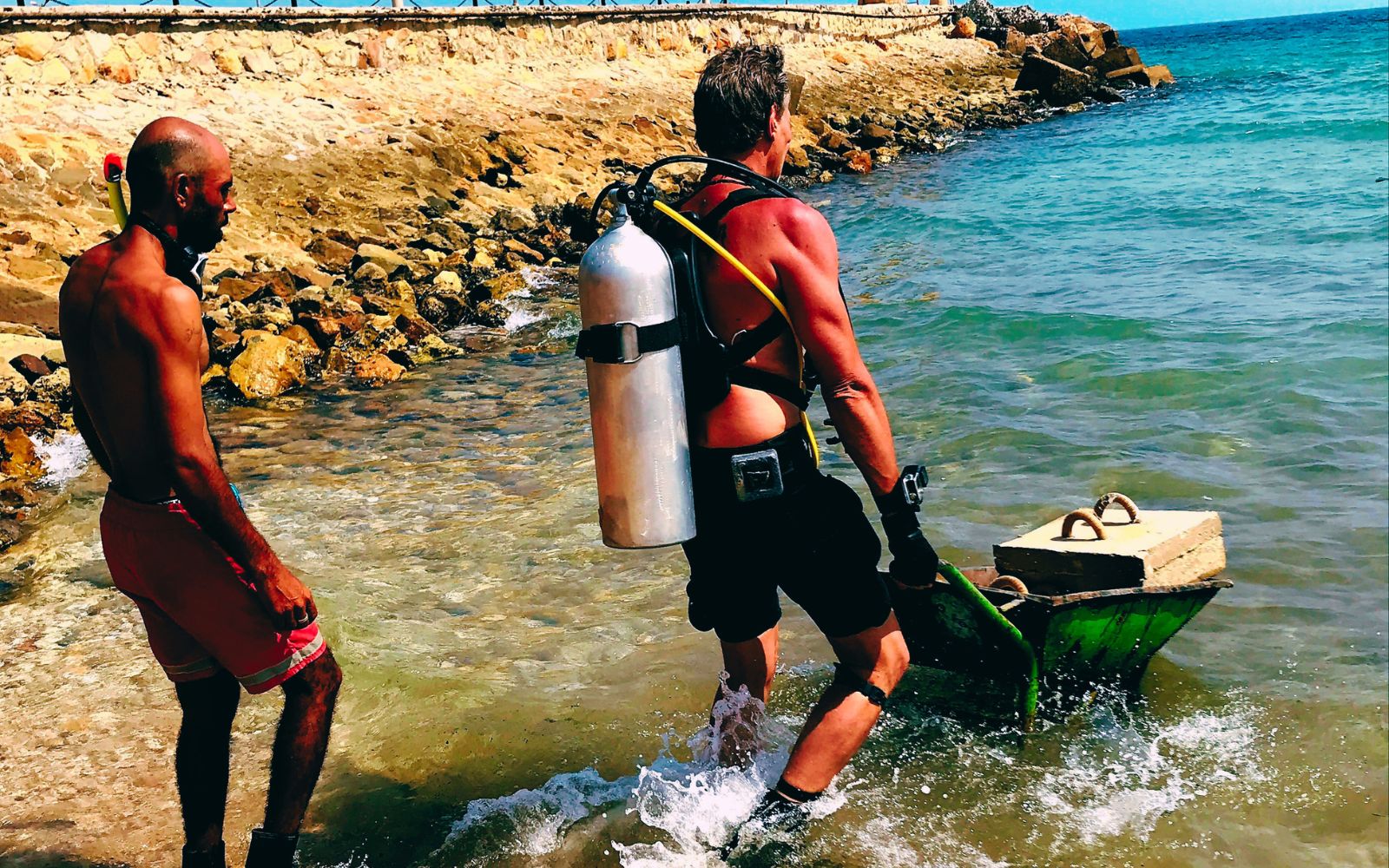
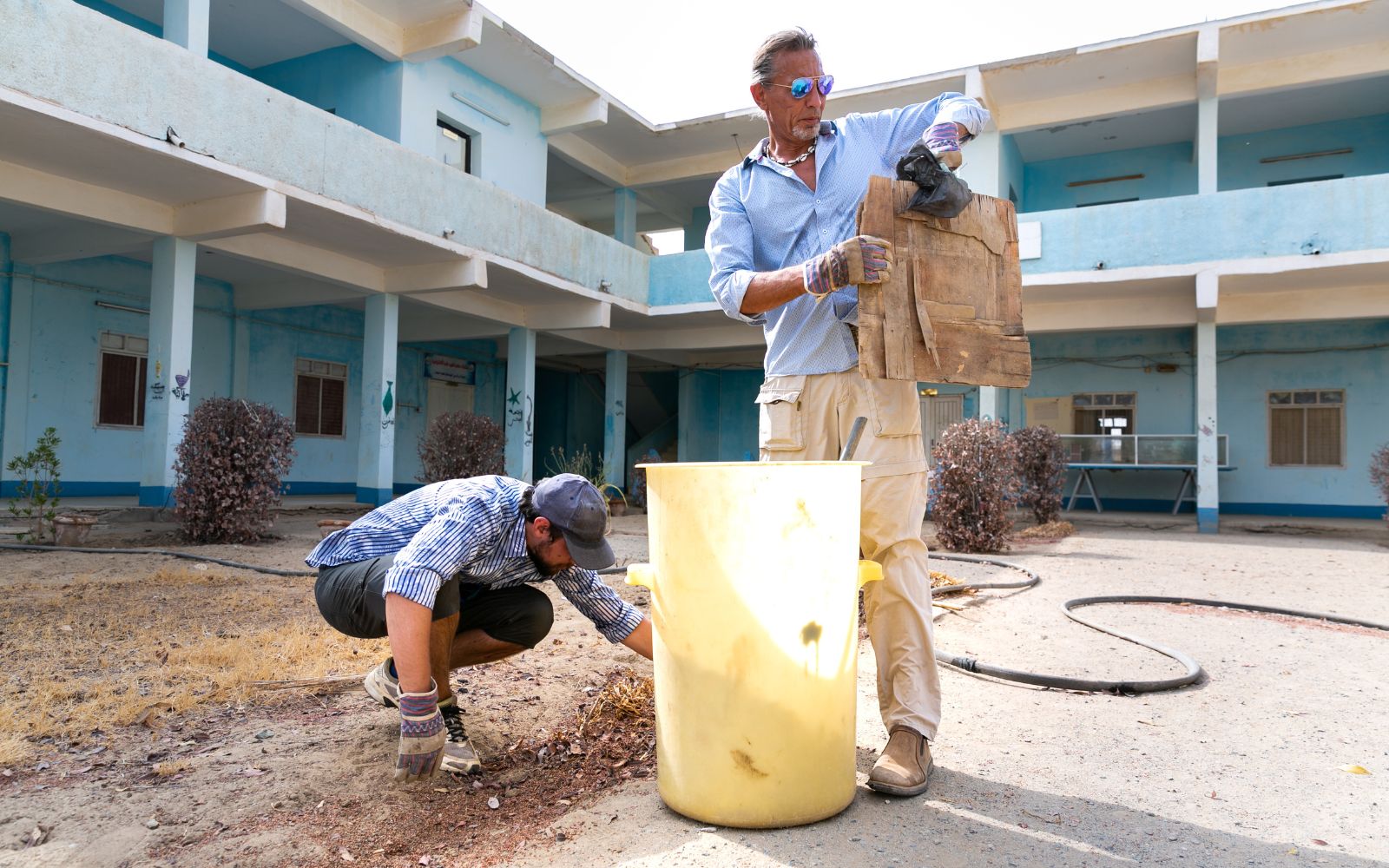
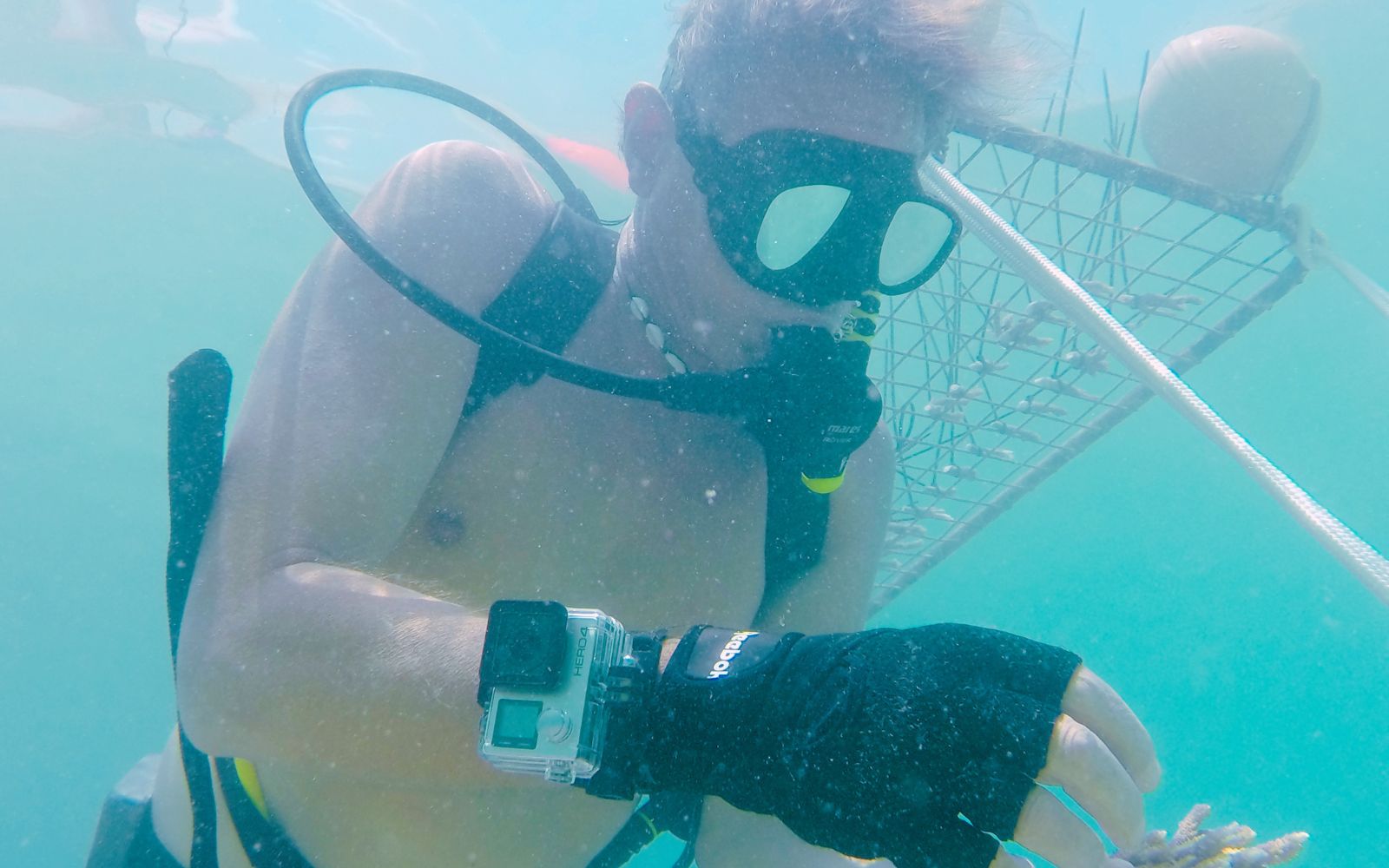
In this area, Operation Red Sea moved from observation into direct field action. Scientific research was carried out, coral nurseries were planted, and 32 tons of contaminants were removed from the marine and coastal environment.
The Suez / Ain Sokhna phase demonstrated how difficult restoration becomes in heavily used coastal-industrial zones. Cleanup is necessary, but it is not enough. Pollution returns if there is no monitoring, no local ownership, no trained coastal workforce, no follow-up, and no practical system connecting authorities, operators, businesses, scientists, and professional divers.
Applied restoration work
Research, Nurseries, and Contaminant Removal
In the Suez / Ain Sokhna area, Operation Red Sea included applied scientific and restoration work in a heavily pressured coastal environment.
- Scientific field research in coastal and marine environments under pressure.
- Coral nursery planting as part of applied restoration testing.
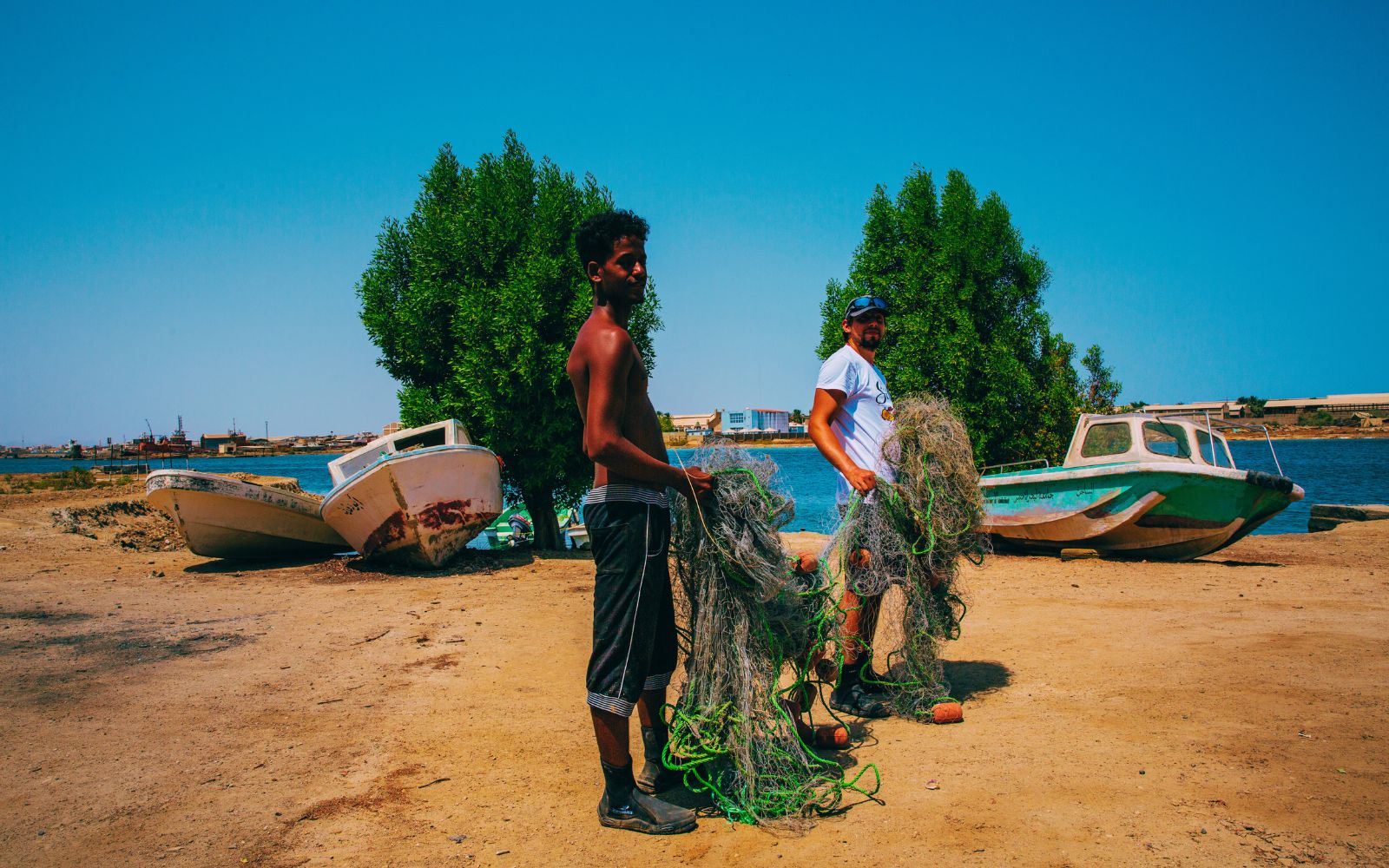
- Shoreline and underwater cleanup in degraded coastal zones.
- Removal of 32 tons of contaminants from the marine and coastal environment.
- Hotel staff training in proper beach maintenance for heavily polluted environments.
These actions became an important proof point for GoBlu3. They showed that restoration must be operationally realistic. Field teams need tools, training, safety procedures, documentation methods, and clear objectives. Coastal restoration is not a photo opportunity. It is a long-term operational discipline.
Coastal workforce training
Training the Coastal Workforce
One of the important lessons from Operation Red Sea was that marine protection is not limited to divers, scientists, or environmental NGOs.
In heavily polluted beach environments, hotel and resort staff are often the first line of daily contact with pollution, waste, debris, and coastal degradation. Operation Red Sea included training hotel staff in proper beach maintenance practices for these conditions.
This matters because beach maintenance is often treated as cosmetic cleaning. Staff are expected to make a beach look presentable, but not necessarily to recognize contaminants, separate harmful materials, understand recurrence patterns, or report environmental problems.
GoBlu3 takes a broader view. Coastal workers, hotel staff, marina teams, boat crews, dive professionals, rangers, researchers, local authorities, and communities all form part of the same environmental response system. If they are trained and connected, they become part of restoration. If they are ignored, the system remains weak.
Field logistics and reality
Restoration Is an Operational Discipline
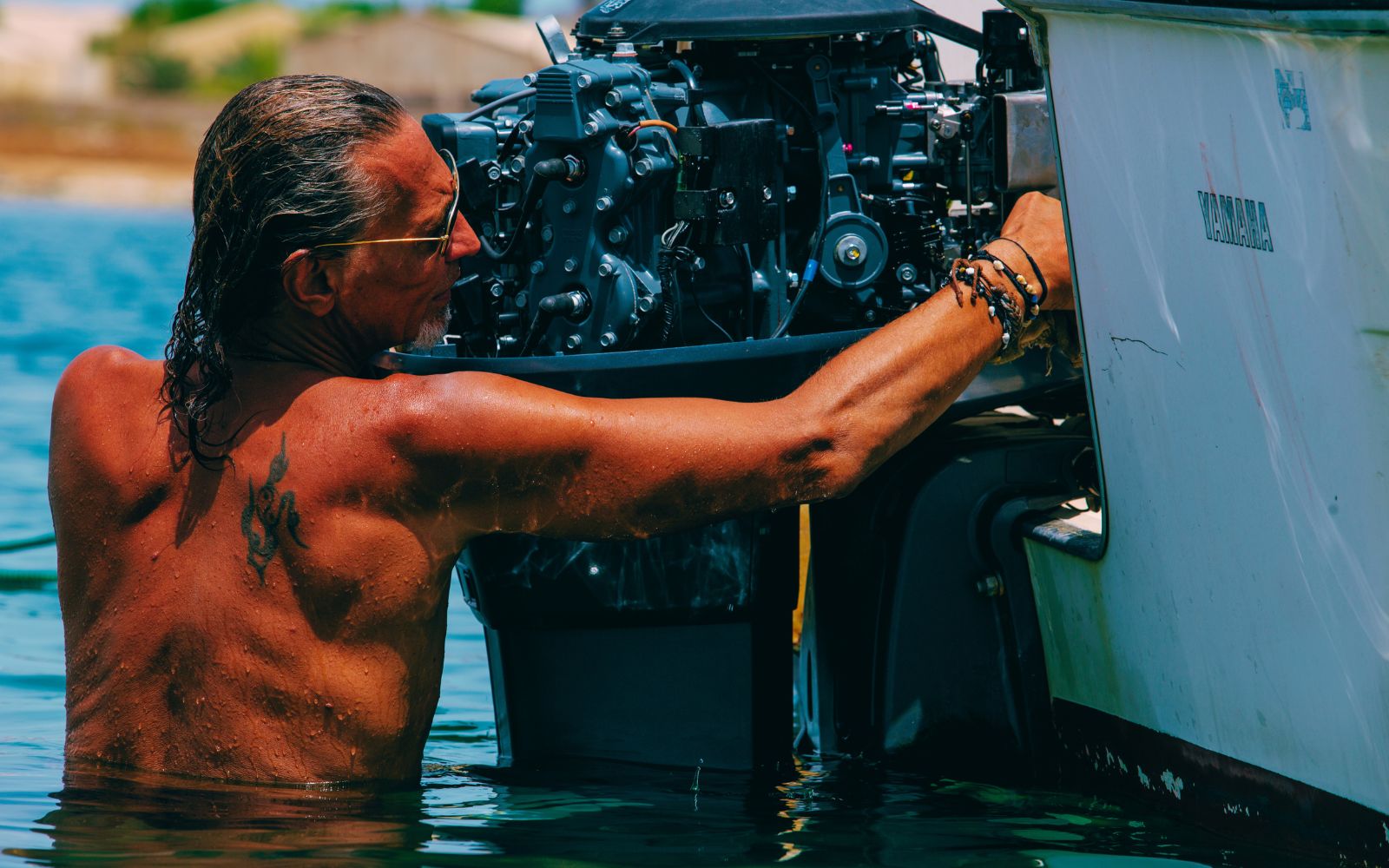
Operation Red Sea confirmed that restoration is not only about underwater action. It depends on boats, engines, field teams, safety procedures, local coordination, equipment readiness, site access, training discipline, and daily problem-solving.
This is one of the reasons GoBlu3 is built around professional field capacity. Marine restoration needs people who can work in real operational conditions, not only in controlled presentations or short-term campaigns.
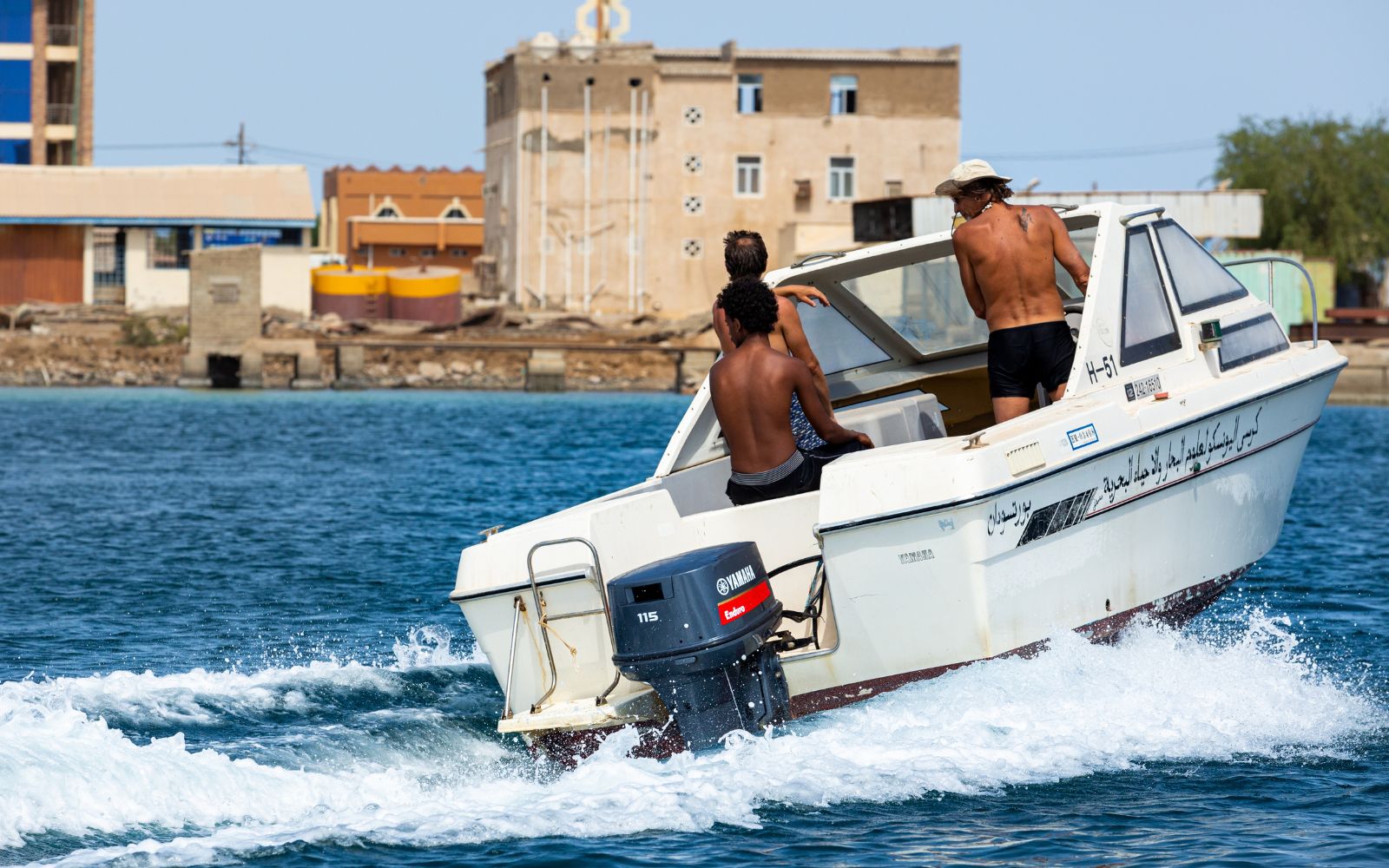
Hundreds of Kilometers of Dying Shorelines
Operation Red Sea included research and direct observation across hundreds of kilometers of stressed and dying shorelines.
This was one of the defining experiences behind the GoBlu3 approach. The scale of degradation made it clear that marine restoration cannot be reduced to isolated cleanups or small symbolic reef projects. These actions may be valuable, but they are not enough by themselves.
Large coastal systems require long-term monitoring, local capacity, repeated intervention, public awareness, professional field support, and economic models that give people a reason to protect what remains.
The Red Sea experience confirmed a hard truth: marine restoration only becomes durable when it is connected to daily life, local value, and professional structure.
Important Lessons Learned
Operation Red Sea helped define GoBlu3 as a practical restoration framework. The lessons were direct, operational, and sometimes hard.
Cleanup is not restoration
Removing waste is necessary, but it is only one part of the process. Without monitoring, prevention, education, local responsibility, and follow-up, the same problems return.
Local capacity decides survival
Marine protection depends on people who remain in the field after a project team leaves. Rangers, local professionals, coastal workers, hotel staff, and community partners must be part of the system.
Professional divers are field assets
Properly trained professional divers can support monitoring, restoration, biodiversity observation, environmental documentation, cleanup operations, and public education.
Hotels and coastal operators matter
Coastal businesses are often daily witnesses to environmental degradation. If they are trained properly, they can become part of the monitoring and response network.
Science must meet operations
Research has limited impact if it does not connect to field practice. Restoration requires a bridge between scientific knowledge, operational logistics, and trained people in the water.
Instability can stop even good work
War, political instability, funding disruption, and loss of access can interrupt even well-designed environmental work. This is why GoBlu3 is built as a transferable regional model rather than a single-location project.
Strategic pause
A Strategic Pause, Not an End
Operation Red Sea is currently paused. The war in Sudan, regional instability, and practical access limitations make responsible deployment impossible for now.
But the operation is not closed.
Its lessons remain active inside GoBlu3. The Red Sea taught IADP that marine restoration must be built as a practical system. It must connect professional divers, local institutions, coastal workers, scientists, communities, businesses, and funders around measurable field action.
When conditions allow, Operation Red Sea can be reactivated. Until then, it remains the foundational experience base behind GoBlu3 and a reminder of why the work matters.
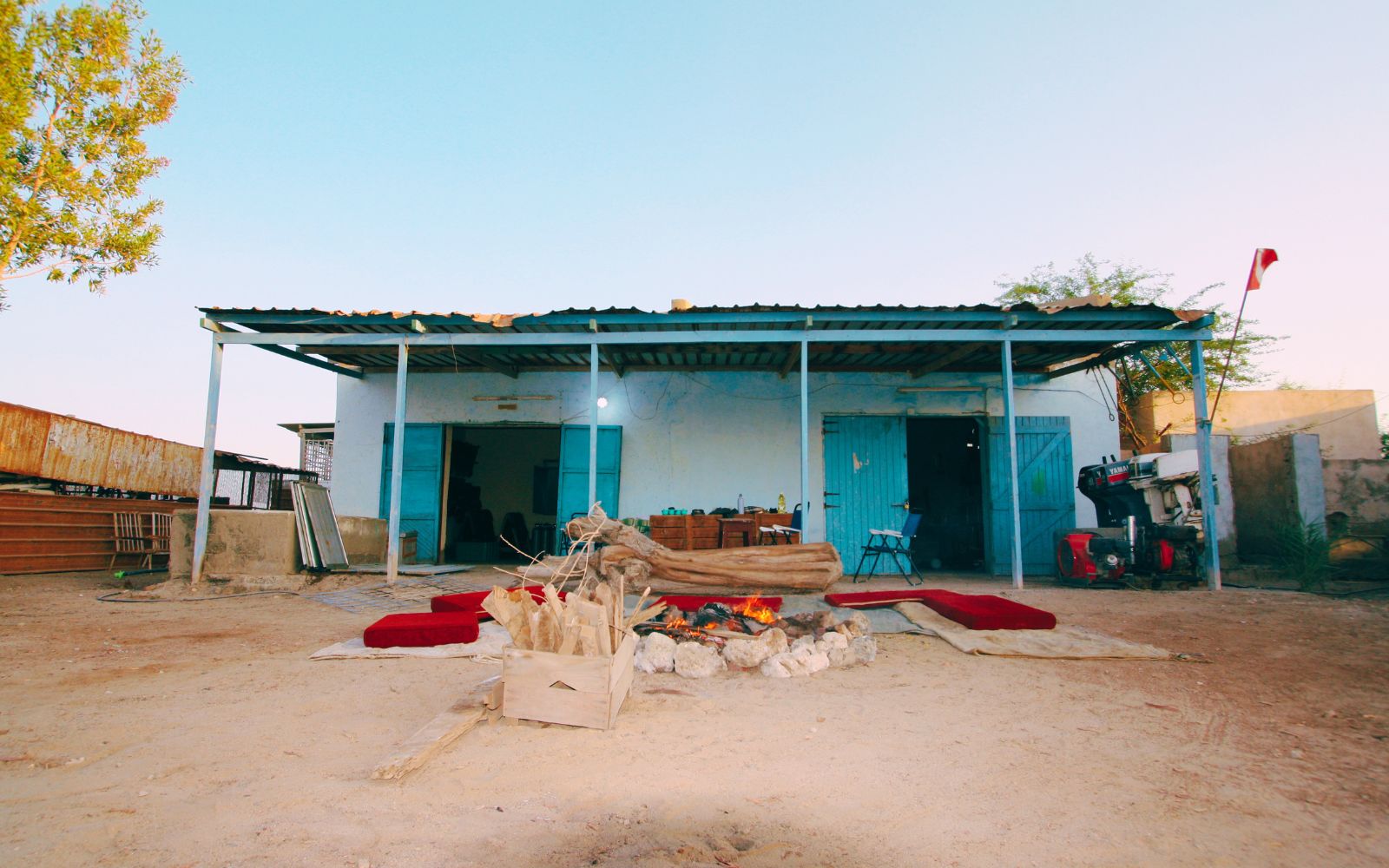
Operation Red Sea showed the scale of the challenge and the limits of good intentions.
It exposed the effects of ocean warming, pollution, weak protection capacity, and coastal degradation. It also showed what becomes possible when professional diving, science, local training, institutional cooperation, and restoration work are connected.
GoBlu3 carries those lessons forward.
Support the GoBlu3 Work
Operation Red Sea is paused, but its lessons are active inside GoBlu3. Support helps IADP continue building the professional, scientific, and operational structure needed for future regional restoration work.
Help carry the Red Sea lessons forward
Support GoBlu3, discuss cooperation, or volunteer with IADP as we continue developing practical restoration operations across priority marine regions.