01
The Reef Is in Serious Decline
Severe degradation is already visible, compounded by disease, thermal stress, wastewater and other local pressures.


IADP’s two-month field review found a widening disconnect between reef condition, market saturation, economic dependence and the structures responsible for long-term stewardship.
As part of Operation Caribe, the International Association of Diving Professionals conducted an extended field review of Curaçao’s recreational diving sector and marine environment during two months of direct professional involvement on the island. The objective was to assess reef condition, examine the structure of the recreational diving training and exploration sector, and understand how business activity, regulation, economic dependence and environmental responsibility interact within one of the Caribbean’s best-known diving destinations.
Before looking at the individual findings, the scale of the relationship between Curaçao, its reefs and its tourism economy is worth establishing. Curaçao covers approximately 444 square kilometres, yet supports a remarkably dense recreational diving market around a comparatively limited reef resource.
Dive schools certified through the Curaçao Tourist Board Quality Assurance programme in March 2026.
Estimated recreational diving providers and operating entities across the wider market, ranging from one-person businesses and micro-operators to established dive schools and centres.
Promoted dive sites around Curaçao, including more than 38 sites accessible directly from shore.
Estimated fringing reef area around Curaçao, concentrated mainly along the more sheltered coastline.
Estimated annual local economic contribution from dive tourism in a 2017 Curaçao diving-industry economic-impact assessment.
Direct and indirect tourism economic impact reported for Curaçao in 2024, including cruise tourism.
The scale of the contradiction is immediately visible: a small island, a limited reef resource, a highly fragmented recreational diving market and an economy deriving substantial value from tourism linked directly and indirectly to the marine environment.
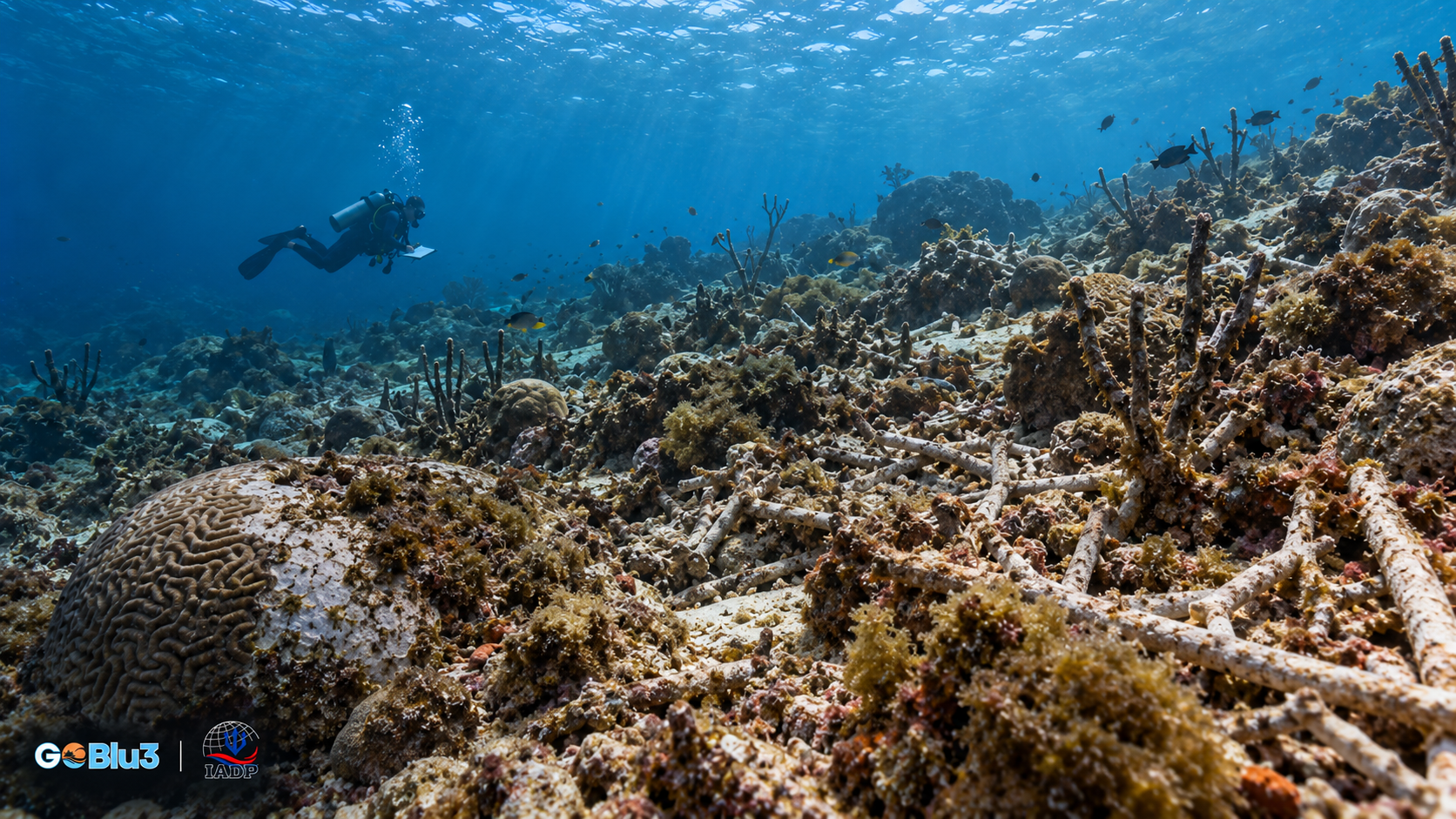
The most serious finding concerned the condition of the reefs. Across repeated dives, IADP observed widespread deterioration of coral structure, extensive areas of dead or degraded substrate, significant algal presence, disease and recent coral mortality. At several locations the level of visible degradation was extreme, with the most severely affected sites appearing to show approximately 80–90 percent loss of healthy coral structure relative to what would normally be expected from a healthy Caribbean reef.
Field assessment: the 80–90 percent figure relates to specific sites observed during the review. It is not presented as an island-wide scientific coral-cover measurement.
The broader scientific record nevertheless confirms a serious long-term decline. CARMABI has documented substantial coral loss around Curaçao and identifies pollution, coastal development, overfishing, climate change, tourism pressure and coral disease among the principal causes. Recent events have accelerated that damage: CARMABI has reported that approximately 28 percent of Curaçao’s coral reefs died within a single year following severe thermal stress and disease outbreaks, including Stony Coral Tissue Loss Disease.
Curaçao’s present condition is particularly striking because the island once maintained a much more visible system of practical reef stewardship. During the mid-1980s, mooring systems were installed at a number of dive sites to reduce anchor damage and provide controlled access to the reef, with the Curaçao Sea Aquarium playing an important role in supervising and maintaining elements of that system.
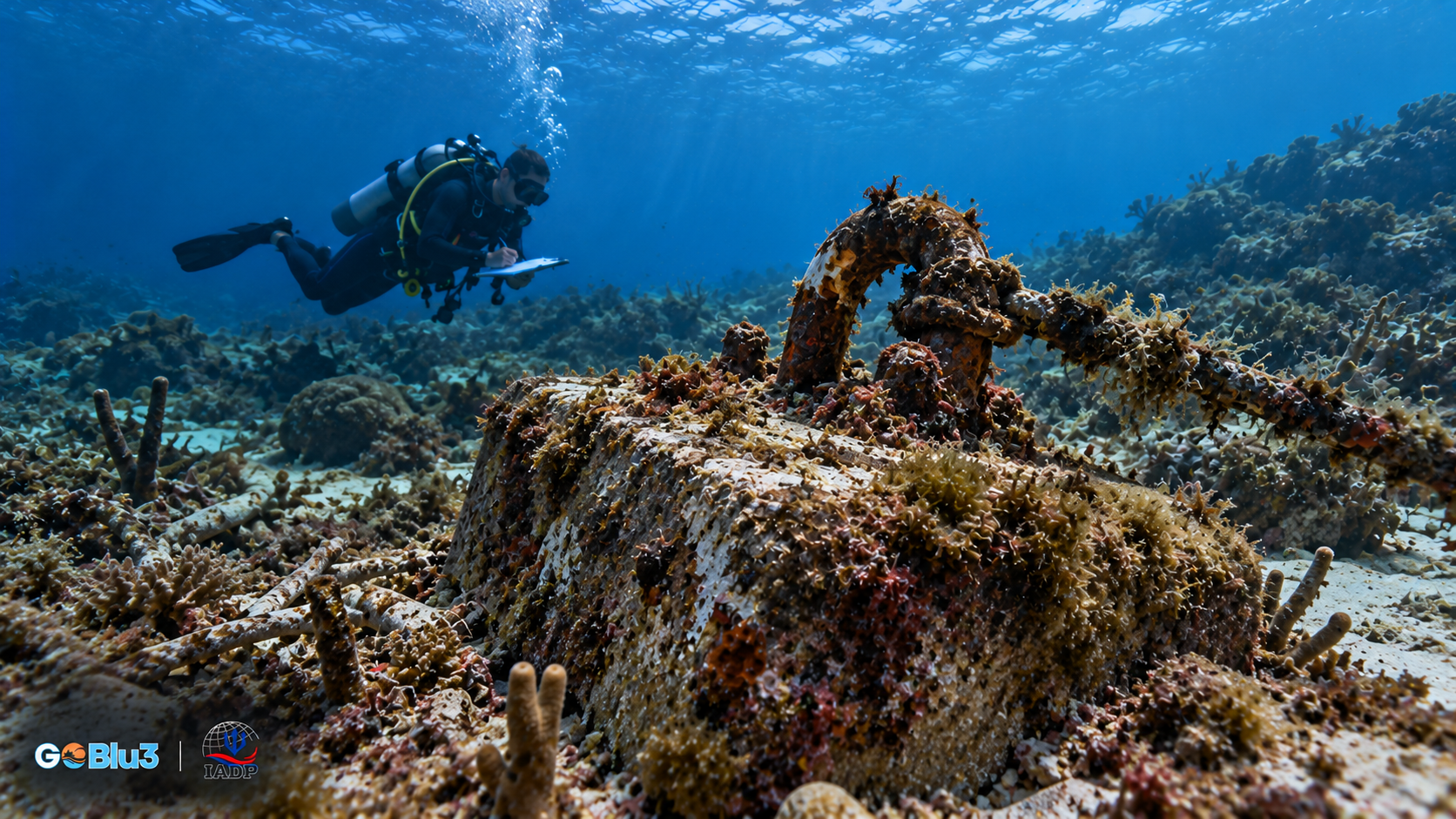
The historical comparison is especially relevant because the IADP reviewer began his professional diving career in Curaçao during that period and was directly involved in installing and working on several of those original mooring systems. During the 2026 review, many original mooring blocks could still be found on the seabed, while the moorings themselves were no longer present at numerous locations.
Curaçao did develop reef-management infrastructure. The concern is that systems already in place decades ago were allowed to disappear.
The same pattern can be seen in environmental interpretation. In the 1980s, parts of the island included educational snorkelling routes with underwater markers identifying coral species and explaining the reef environment. Much of that infrastructure has disappeared as well. This is more than the loss of a few moorings or educational signs; it reflects a visible decline in organised reef stewardship over several decades.
Climate change does not explain everything happening underwater. A significant part of Curaçao’s reef pressure originates on the island itself, and wastewater management is one of the clearest examples. CARMABI has repeatedly reported that Curaçao’s wastewater-treatment capacity is insufficient, while many households and businesses depend on septic systems. Wastewater and nutrients can reach coastal waters through groundwater transport, leakage, overflow and direct discharge.
In 2025, CARMABI reported that approximately 300,000 litres of untreated sewage and other waste per day were being discharged at Shut, in addition to other documented coastal discharge points. Excessive nutrients favour algal growth, reduce water quality and add pressure to corals already weakened by disease and elevated sea temperatures.
Curaçao internationally markets its reef as an economic and tourism asset while the infrastructure required to protect that same asset has not kept pace with development, population pressure and environmental demand.
The environmental problem exists alongside a second structural issue: market saturation within the recreational diving sector. Curaçao supports established dive centres, small dive schools, boutique operators, one-person businesses, micro-operators and other small entities competing within a relatively limited tourism market. Digital marketing has lowered the threshold for entering that market, allowing very small businesses to advertise courses, guided dives and related services directly to visitors.
Small providers are not inherently a problem and many offer excellent, highly personalised services. The issue begins when the total number of businesses and operating entities becomes disproportionate to the customer base available to support them.
The wider market extends far beyond the formally quality-assured dive schools and includes one-person businesses, micro-operators, small schools, established centres and other providers operating across the island.
Visitor numbers do not increase simply because more businesses begin offering diving services. Additional supply therefore divides essentially the same market among an increasing number of providers.
Market saturation does not stop at lower prices. It produces price competition, weaker margins, more vulnerable businesses and progressively less capacity to invest time and money in the reef on which the entire sector depends.
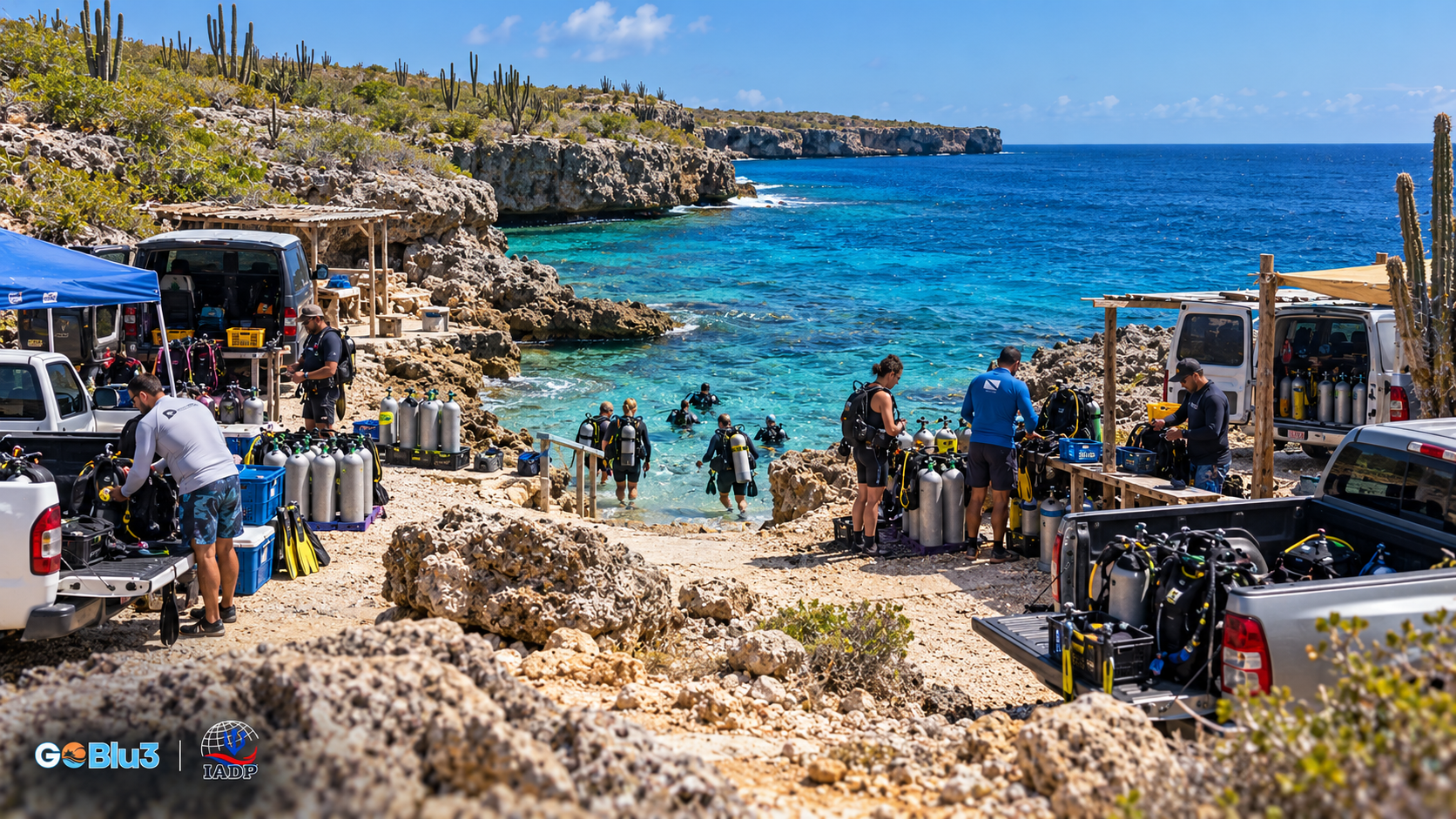
Training organisations such as PADI, SSI, NAUI, CMAS, NOB and others establish educational standards and certification systems within recreational diving. Their role is fundamental, but certification is not destination or market regulation. A training organisation may certify an instructor, but it does not determine whether Curaçao requires another recreational diving business, whether sufficient demand exists to support another provider, or how many operating entities the local market can realistically sustain.
Nor does a diving qualification automatically establish a complete business framework. Business registration, operating requirements, insurance, destination standards and environmental obligations are separate matters.
The distinction is simple: certification establishes competence within a training system. Regulation establishes the framework within which recreational diving businesses operate.
Another important conclusion concerns the people who built and maintained many of Curaçao’s established dive businesses over several decades. A significant number of long-established owners and operators are now approaching retirement or withdrawing from active management. Some have successors; others have not found anyone willing or able to take over their businesses.
Many have seen the full cycle of Curaçao’s modern recreational diving industry: expansion, the development of mooring systems and educational initiatives, increasing competition, declining margins and the gradual deterioration of the reefs themselves. During the IADP review, a recurring impression was not simply indifference, but fatigue.
Operators who spent decades contributing time, money and labour to reef stewardship increasingly felt they were carrying responsibilities that should have been shared across a much larger market. As margins tightened and businesses became harder to sustain, the practical ability and willingness to continue funding work that generated no direct revenue inevitably weakened.
The Curaçao Tourist Board’s Quality Assurance programme provides an important formal structure. The audited businesses within that programme form the visible core of Curaçao’s organised recreational diving product.
The wider market is considerably larger. There is no easily accessible consolidated public register showing how many recreational diving providers, one-person businesses, micro-operators and other small operating entities are actively offering services on the island. That creates a clear transparency and regulatory gap.
Curaçao’s wider recreational diving market is often easier to identify through agency directories, business websites and social media than through a single transparent destination-level framework.
The figures presented at the beginning of this review establish an important point: Curaçao’s reefs are not simply environmental assets. They form part of the island’s productive tourism infrastructure.
The 2017 diving-industry assessment demonstrated that dive visitors generated substantial expenditure not only through diving itself, but through accommodation, food and beverage, car rental, equipment and other related spending. The much larger tourism figures reported in subsequent years further underline how important the visitor economy has become to Curaçao.
The dive-tourism assessment is now several years old and IADP has not identified a more recent public study isolating recreational diving’s present economic contribution. It should therefore not be treated as a current valuation. It does, however, demonstrate that reef-based tourism has long generated economic activity measured in tens of millions of dollars.
Publicly available information does not provide an equivalent figure showing how much of the value generated through reef-based tourism is systematically reinvested in reef infrastructure, moorings, rehabilitation, environmental monitoring or wastewater improvements directly benefiting the marine environment.
That is the fundamental economic question. Tourism development continues while scientific institutions repeatedly document wastewater, coastal-development, thermal and disease pressures affecting the reef system. Curaçao clearly derives economic value from its marine environment; what remains much less transparent is whether investment in protecting that underlying natural asset has kept pace with the value derived from it.
A reef supporting tens of millions of dollars in economic activity should not be treated as an asset capable of maintaining itself.
Market saturation, reef decline and economic dependence on reef-based tourism should not be treated as separate issues. A heavily saturated market places pressure on prices and profitability, while reduced margins limit the resources available for reef stewardship, environmental education, monitoring and maintenance. As participation in stewardship declines, reef pressure increases; as reef quality declines, the value of the diving product declines with it.
More businesses compete for a limited recreational diving customer base.
Pricing pressure reduces resources available for stewardship and long-term investment.
Environmental deterioration progressively weakens the economic product on which the sector depends.
Severe degradation is already visible, compounded by disease, thermal stress, wastewater and other local pressures.
A large and fragmented recreational diving provider base competes within a relatively limited tourism market.
Dive tourism has been documented as generating tens of millions of dollars in local economic activity, while the wider tourism economy is worth billions.
Price competition and lower profitability reduce the resources available for moorings, conservation, monitoring and long-term reef care.
Long-established operators are ageing, retiring or disengaging, taking decades of institutional knowledge and voluntary stewardship with them.
The central finding: Curaçao’s reef decline, market saturation and economic dependence on reef-based tourism are interconnected. A fragmented and economically weakened recreational diving sector has progressively less capacity to protect a marine resource that simultaneously generates substantial value for the island.
The findings of this review should not be interpreted as declaring Curaçao a lost diving destination. It is not. The island still possesses exceptional shore-diving access, experienced operators, substantial accumulated industry knowledge, surviving high-quality reef areas and internationally respected marine research capacity. Organisations such as CARMABI provide scientific expertise that many diving destinations do not possess, while committed businesses and organisations continue working to protect and restore the marine environment.
These strengths are precisely why the present situation deserves attention. Curaçao still has the capacity to change direction.
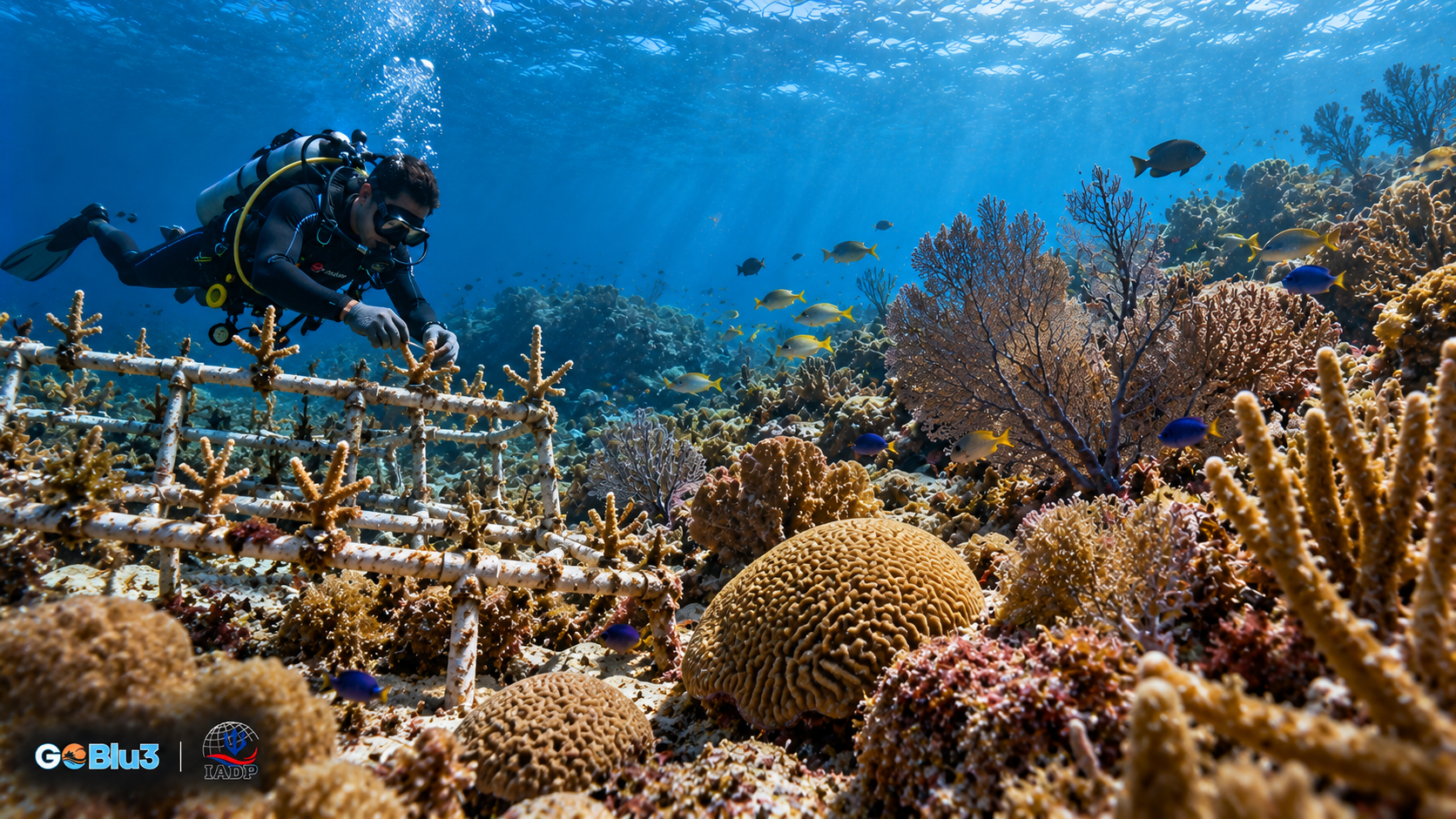
The Curaçao case demonstrates that voluntary environmental goodwill alone is no longer sufficient for a recreational diving sector of this scale. A stronger destination-level framework should improve visibility over who is providing recreational diving services, establish consistent business and operating requirements, broaden participation in quality standards, define environmental obligations more clearly and rebuild effective mooring, dive-site and reef-management systems.
Greater transparency over which businesses and operating entities provide recreational diving services and under what operating structure.
Environmental obligations should apply across the sector rather than remain primarily voluntary.
Reef conservation cannot compensate indefinitely for inadequate wastewater treatment, land-based pollution and insufficient long-term environmental infrastructure.
Those who derive economic value from recreational access to the reef should share responsibility for protecting the natural asset that generates that value.
Curaçao is not an isolated case. Across the Caribbean, reef systems are declining while tourism, coastal development and recreational diving activity continue expanding. Training organisations continue feeding new qualifications into destinations that often possess limited mechanisms for understanding or managing the real size of their local provider markets, while environmental stewardship remains heavily dependent on conservation organisations, volunteers and a relatively small number of committed operators.
Curaçao makes these contradictions particularly visible because the island combines a mature recreational diving industry, exceptionally easy reef access, a heavily fragmented provider market, substantial tourism value and serious environmental pressure within a limited geographical area. The future of Caribbean diving therefore cannot be measured solely by certification numbers, tourism arrivals or dives sold; it must also be measured by whether businesses remain viable, whether operating standards are coherent, whether environmental responsibility is shared fairly, whether tourism revenue contributes to protection of the underlying resource and whether healthy reefs remain for the next generation.
Support our work.
IADP is an independent non-profit association, and much of the research, field assessment,
sector mapping and project-development work behind initiatives such as
Operation Caribe
is developed through volunteer effort and direct support. Donations help us continue
independent research, practical marine initiatives and stronger long-term structures
for the diving sector.
This assessment combines IADP field observations with publicly available information from Curaçao marine-science, tourism, industry and government sources.
CARMABI Foundation
Curaçao Tourist Board
Curaçao Tourist Board – Industry Information
Curaçao Hospitality & Tourism Association
Government of Curaçao – Digital Services
IADP · GoBlu3 · Operation Caribe
IADP – DIVE PROFESSIONALS
International Association of Dive Professionals
Non-Profit Association (ASBL)
Rue Émile Féron 153
1060 Saint-Gilles (Brussels) – Belgium
A proud member of Cité des Associations, Saint-Gilles